Introduction
PMPD – New-Generation Bioactive P and K Nutrient
PSAP -PMPD (K₂P₂O₆) is a new-generation bioactive nutrient formulation based on an innovative catalytic science approach. Its crystalline structure has been studied through X-ray diffraction analysis at CSIR-NCL, Awarded a patent by the Government of India to PSAP-PMPD
PMPD represents a promising technology addressing key global challenges in food production, food security, safety and sustainable agriculture.
PMPD – Advancing P & K Efficency
To overcome limitations of phosphorus and potassium related to solubility, fixation, availability, uptake and absorption, a dedicated research program on phosphorus activation was initiated in Pune in 2002–03.
After six years of rigorous research, PSAP-PMPD was developed to address key limitations in conventional P & K application and improve nutrient utilization by crops.
Within plants, available phosphate and potash support essential metabolic processes, contributing to plant growth, physiological balance and defense responses against invading phytopathogens.
PMPD: Supporting Plant Defense & Stress Mitigation
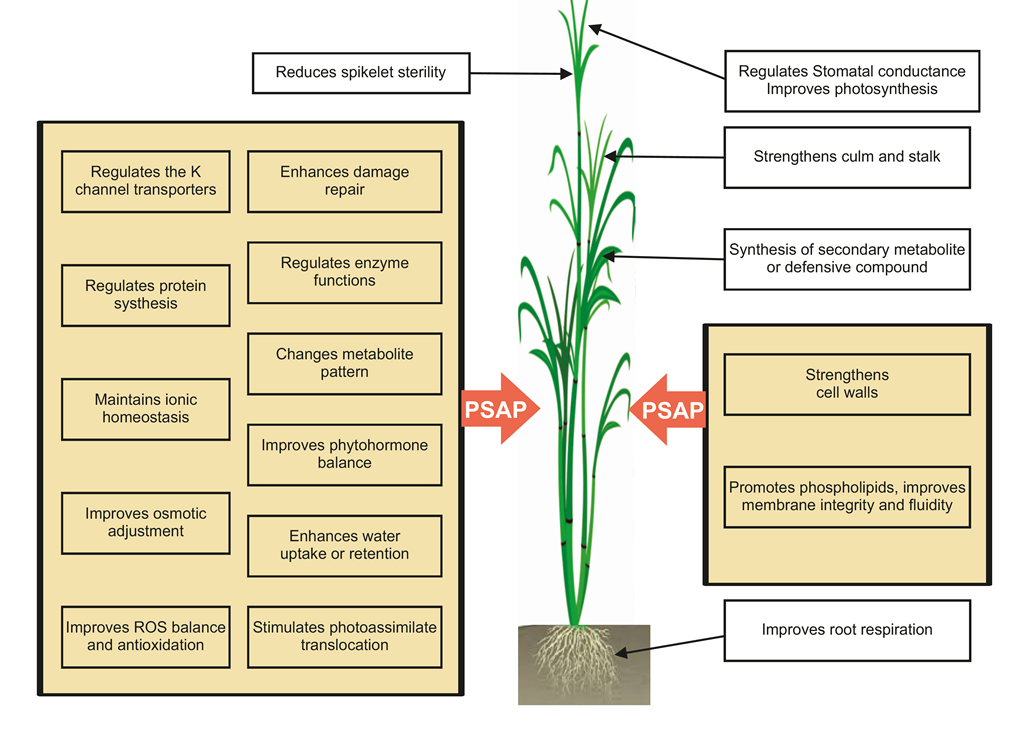
With split application of PSAP-PMPD, plants can respond rapidly to stress during both pre- and post-infection stages, supporting recovery and maintaining physiological activity. PSAP-PMPD supports key defense responses, including structural, chemical and protein-based
defenses, synthesis of secondary metabolites, efficient bio-energy translocation and improved nutrient assimilation.
Through this complex mode of action within the plant’s innate defense system, PSAP-PMPD plays a key role in mitigating the effects of biotic and abiotic stresses.
PMPD: Enhancing Crop Stress Tolerance
PSAP helps mitigate biotic and abiotic stresses by supporting the plant’s natural defense and metabolic responses.
It promotes ROS scavenging, nutrient assimilation, redox balance, secondary metabolite synthesis, stress signaling and enzymatic recovery, helping maintain cellular homeostasis.
PSAP strengthens crop resilience, with potential to reduce chemical dependency, support soil health and benefit farmers and consumers.